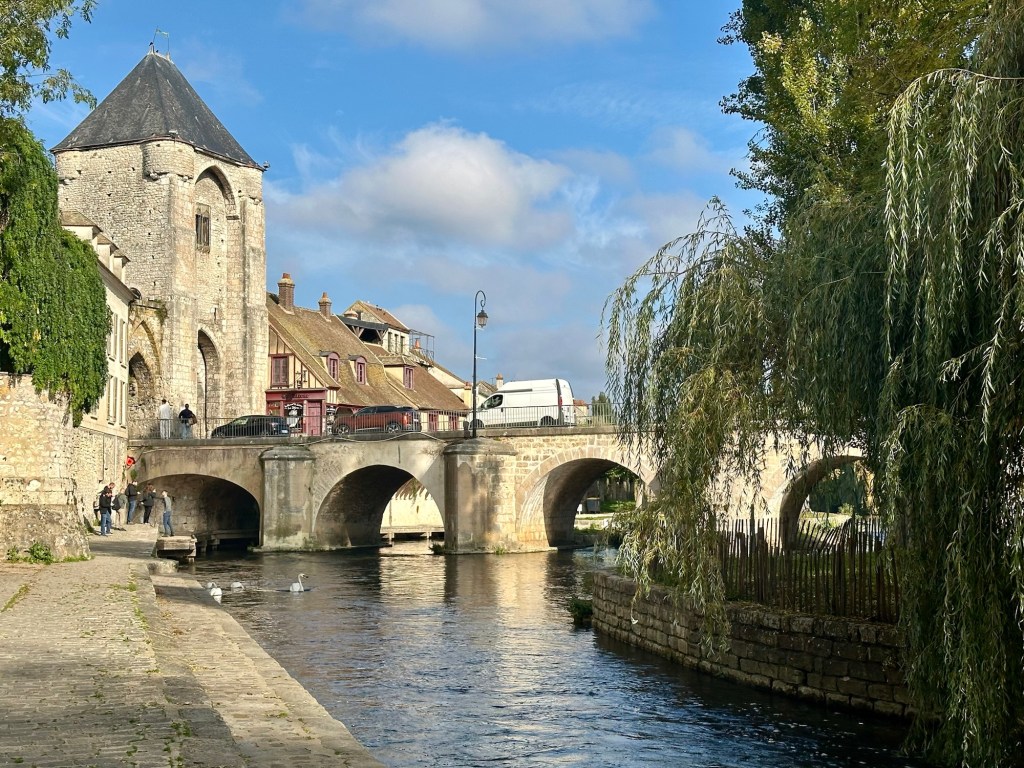
Scores of people get off the train from Paris at Moret-Veneux-Les-Sablons. Most, I notice, are carrying the international symbols of tourism—a camera and a bottle of water. Since I’m not quite sure what I’m doing, this is hopefully a sign of an interesting place. That place is the next village over, Moret sur Loing. Per Google maps, it’s a twenty minute walk.
Months ago, I read somewhere (can’t remember where) that this is ‘the most charming day trip from Paris.’ It seemed weird that I’d never heard of it, but I placed a tickler on my calendar out in the future as I tend to do with books or places or other things that I stumble upon and one day want to remember to try. For the last several months, it was never a good time, so each time Moret sur Loing popped up on my calendar, I pushed it forward—until today.
As I leave the station, rather than pull out my phone to map my route, I follow a couple from Japan who are carrying a camera with one of those lenses that Pat always covets. In their camera case side pouch is a liter bottle of water.
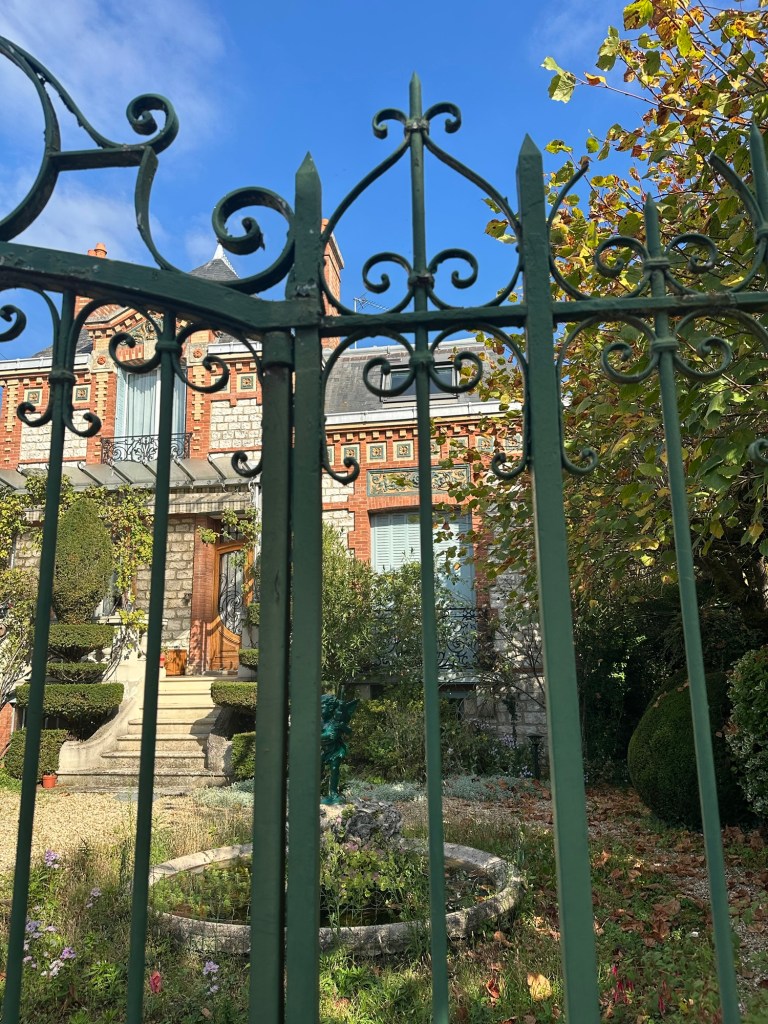
As we walk away from the train station, the houses transition from cottages to manors and the surrounding spike fences become taller and spikier. It’s 10 AM; the sun is starting to burn off the overnight chill. I hear the muffled yells of some sporting event in the distance, but I can’t see what it is.
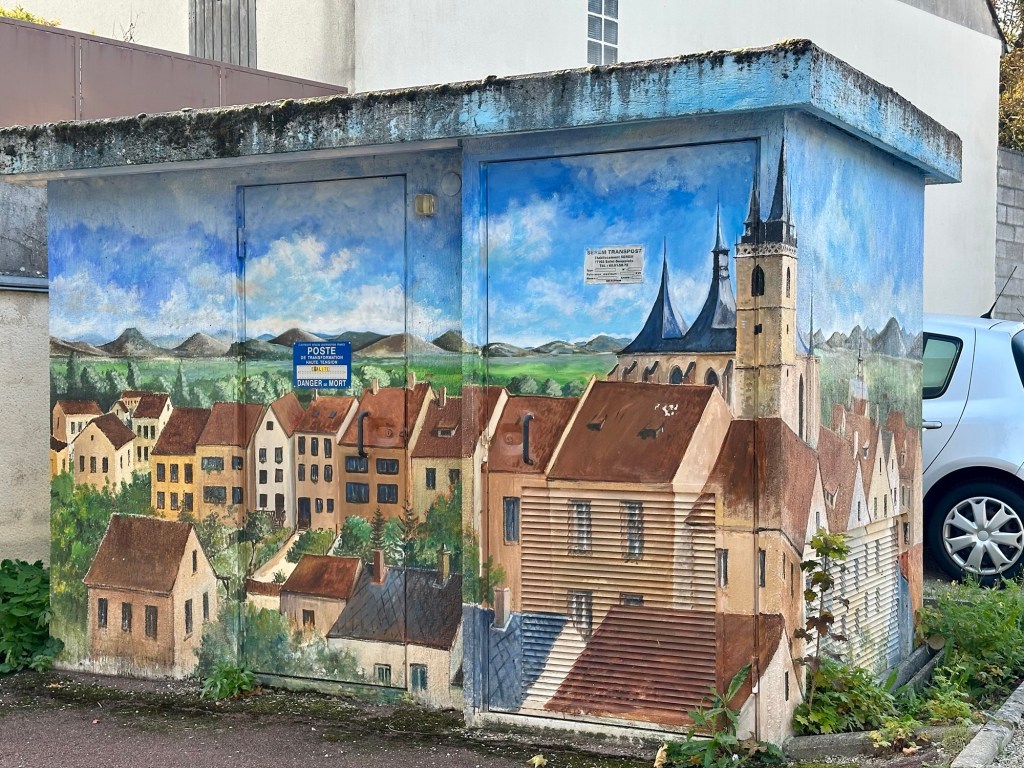
I take a photo of an ‘electrical-danger-die’ box that you see in towns. I have no idea what they do, but I find this one fascinating.
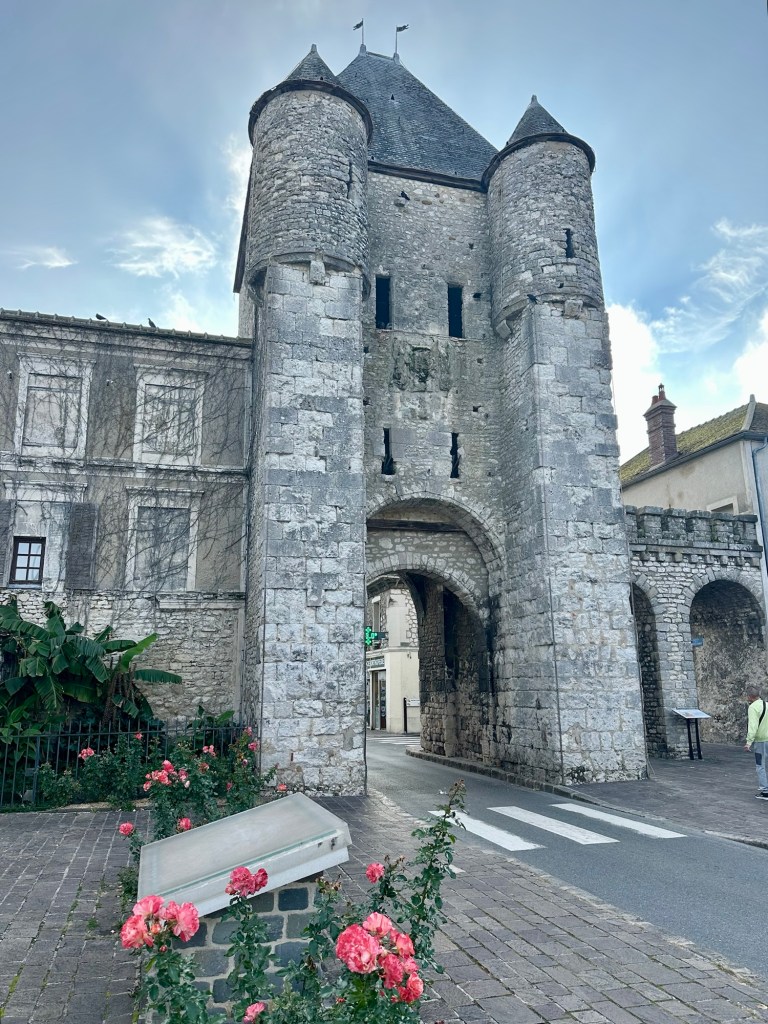
Twenty minutes later, I arrive at the medieval stone tower that is the gate into the old village. My guides wander off, but that’s fine; I can take it from here.
After entering through the gate, I stop almost immediately at a bistro that grabs me by the throat and insists that I order a second breakfast. At least that’s my defense. But really, second breakfast needs no defense.
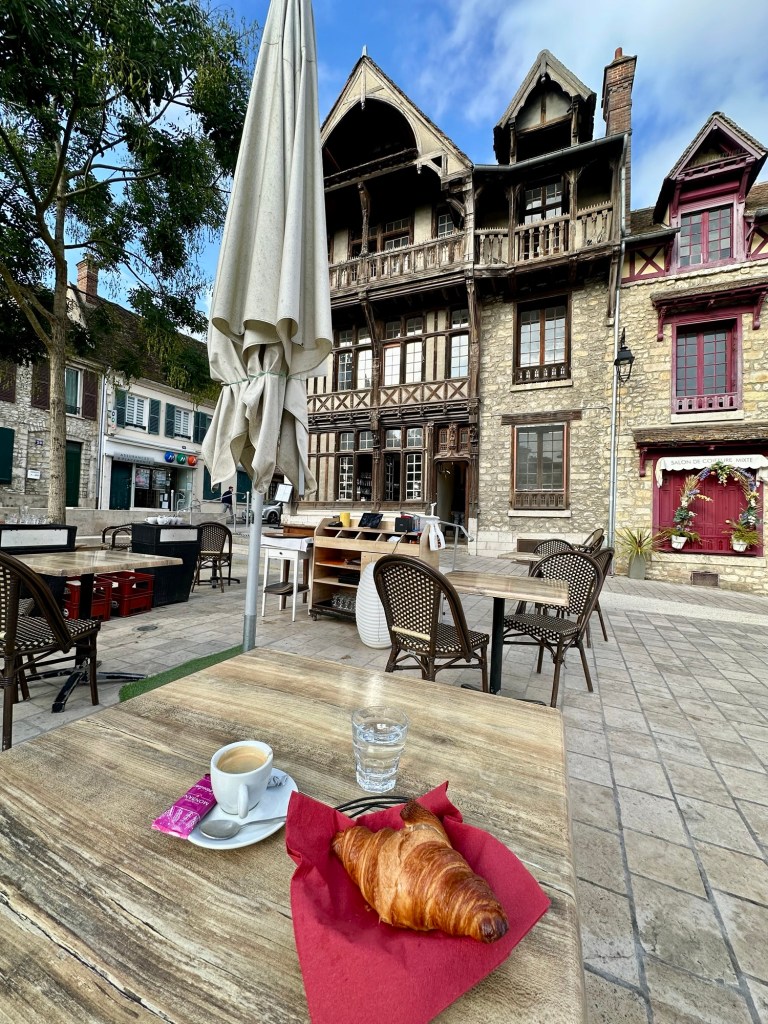
It’s neither a common nor an uncommon occurrence, but second breakfast, when consumed, is my favorite meal of the day. The waiter is friendly in a way that waiters tend to be who don’t serve hoards of tourists daily. He smiles. Asks if I have any questions. Meanwhile, a nearby carousel plays carnival music on a loop, as I tap my foot to the beat.
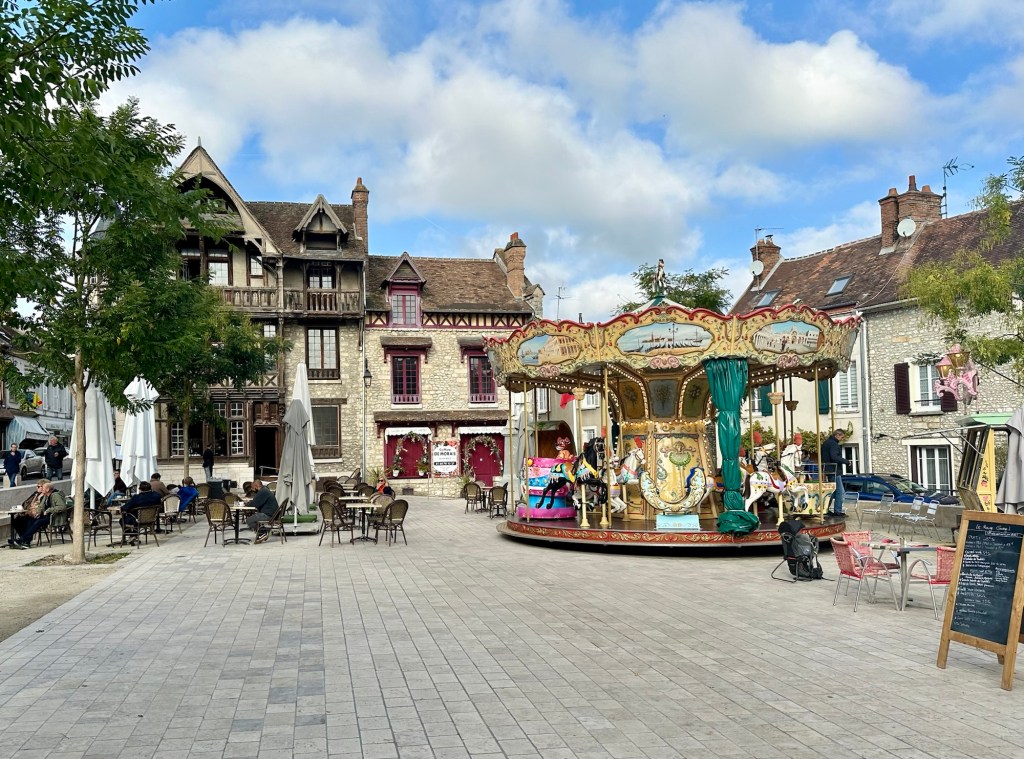
The vibe is old world French. Although it’s arrestingly cute, it isn’t overrun like the A-list destinations near Paris tend to be—Versailles, nearby Fontainebleau, Vaux Le Vicomte, and on and on.
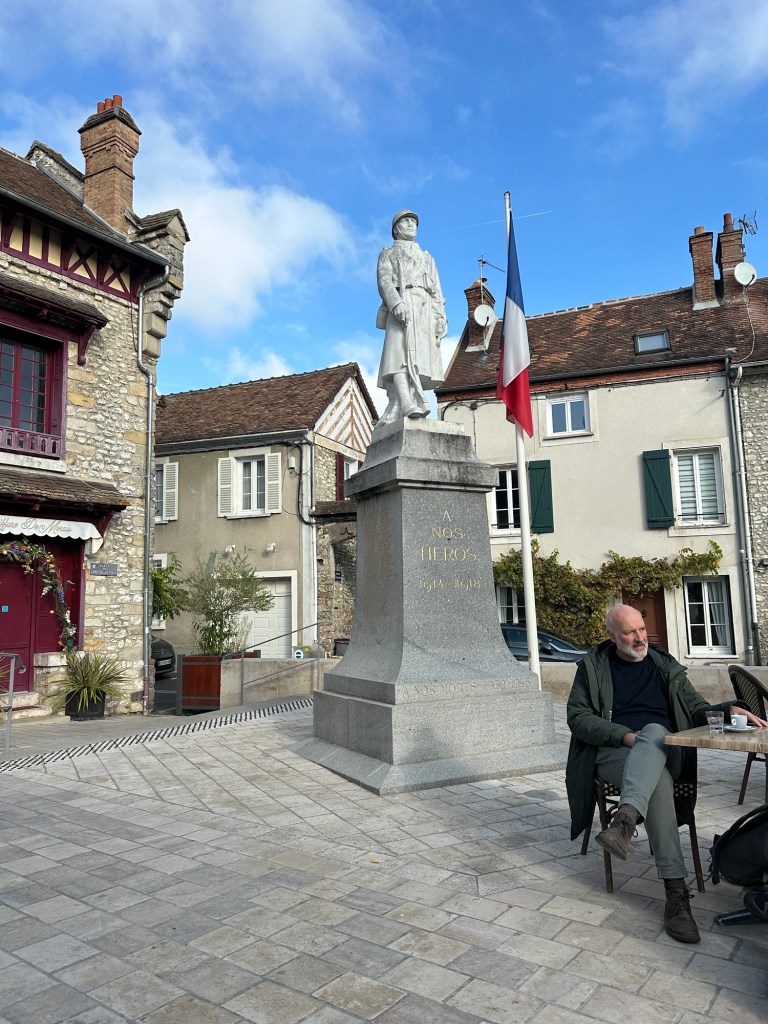
As I leave the bistro, I notice that horse steak is on the lunch menu. Horse was once common in France. Until recently, it was sold in our neighborhood market. I’m torn between the temptation to return later to try it and an impending gag reflex. I won’t think about it, until I have to think about it.
For now, I turn towards the Loing River.
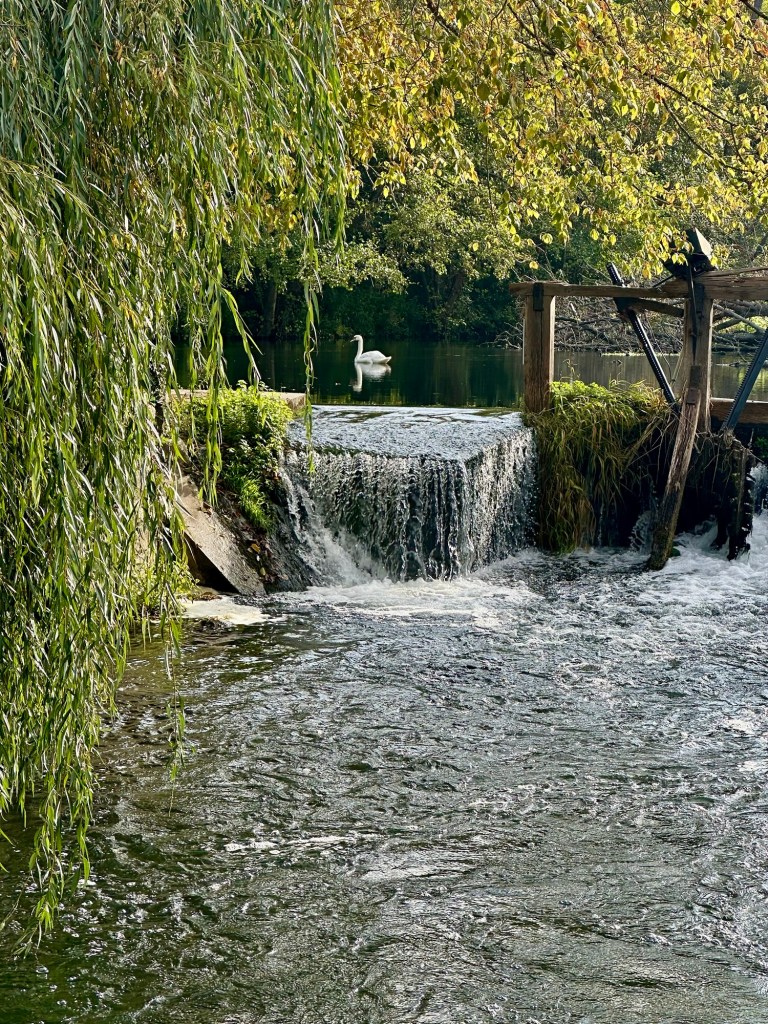
A young couple are fishing. Someone nearby is rhythmically sanding wood. The swans are practicing their synchronized swimming routine. The images along the river bank exactly match the photos I’ve seen online.
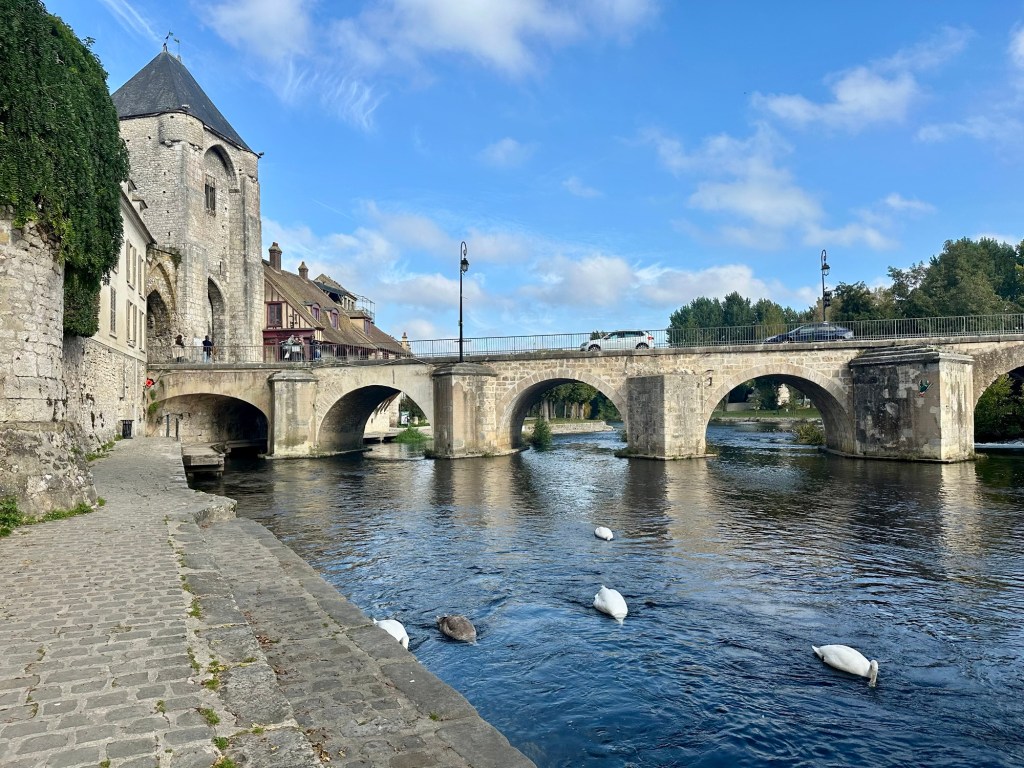
Continuing back on the main road, I spot an intriguing crêperie wedged beside the exterior of the second town gate. (If you haven’t figured this out, my brain is constantly searching for my next meal.) The restaurant is perched above the river in such a way that, should I be predisposed to such things, I could dive from its terrace ten or more feet to the waters below.
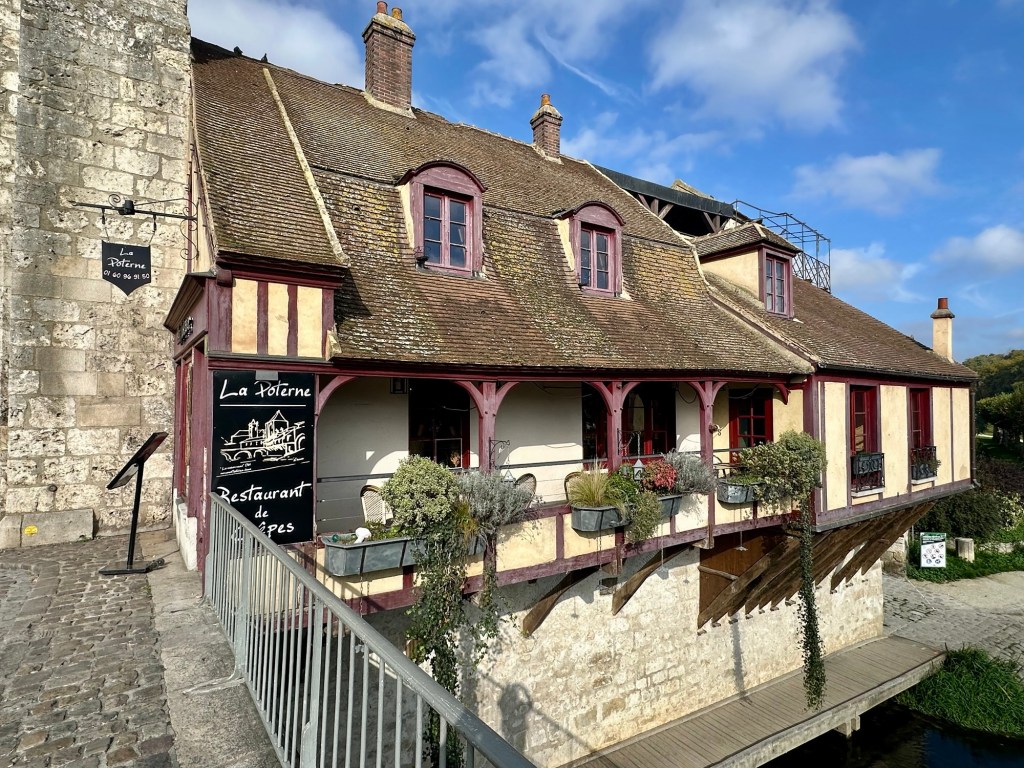
It’s a compelling lunch option, but back in Paris I have a crêpe man. Every time I come into his restaurant he hugs me tightly and kisses my cheeks. In general, Pat and I both believe that we should have one, and only one, crêpe man (or pizza man, wine man, cheese man, fruit and vegetable stand woman). Since each of these positions is currently filled, we aren’t interviewing new candidates.
I take a photo and proceed across the bridge.
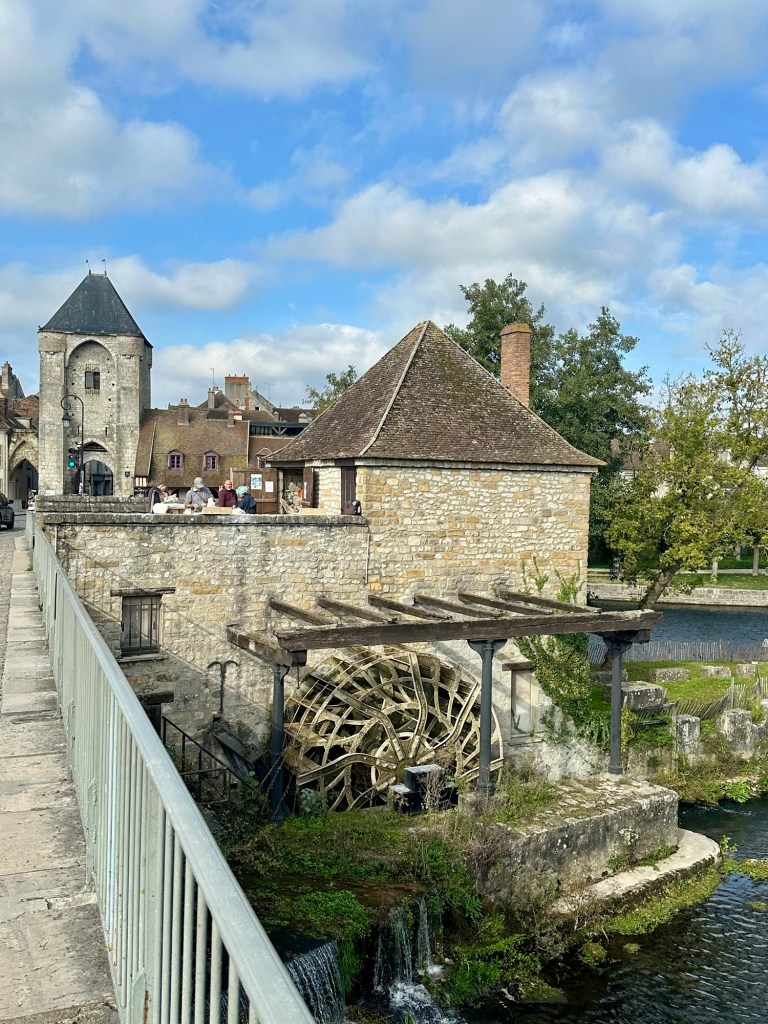
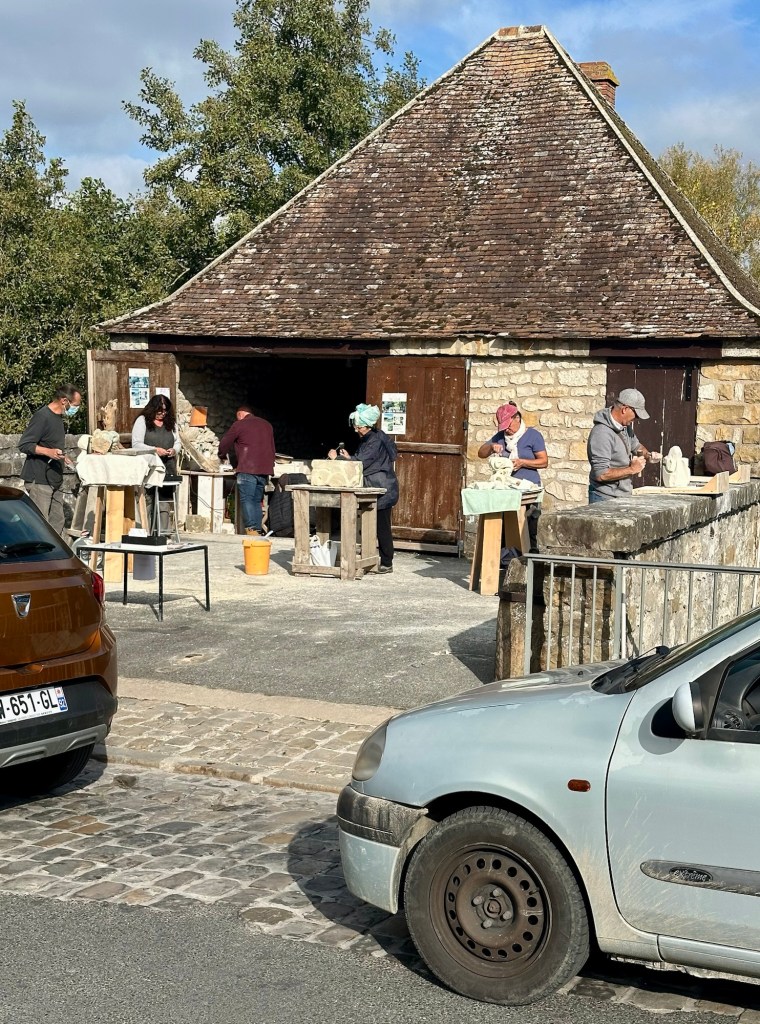
In the center is some form of an old watermill-cum-artstudio with 5 or 6 (I’ll venture to guess) non-artists chipping away at shoe box sized blocks of stone. To me, it seems like a completely miserable way to spend a beautiful Saturday morning (and by the looks on their faces, I’m guessing a few would agree with me). But who am I to judge? I’ve left my share of failed mid-life-hobby flotsam in my wake.
I move on.
Across the river there’s little more than a tabac. The locals are convening at the sidewalk tables. These places are a local-life goldmine.
But not today.
I cross back over the river and up to the church, at this point wandering directionlessly which is the most compelling tourist pursuit in Moret sur Loing. A woman walking her dog passes by the church and crosses herself.
I enter.
Inside, I read that the church took three centuries to build. Three hundred years (!) is unfathomable. To put it in an American context, if the founding fathers had started this church around the time they were dumping tea into the Boston Harbor, we’d still be a few decades away from completion. I wonder how the building campaign maintained credibility for 300 years.
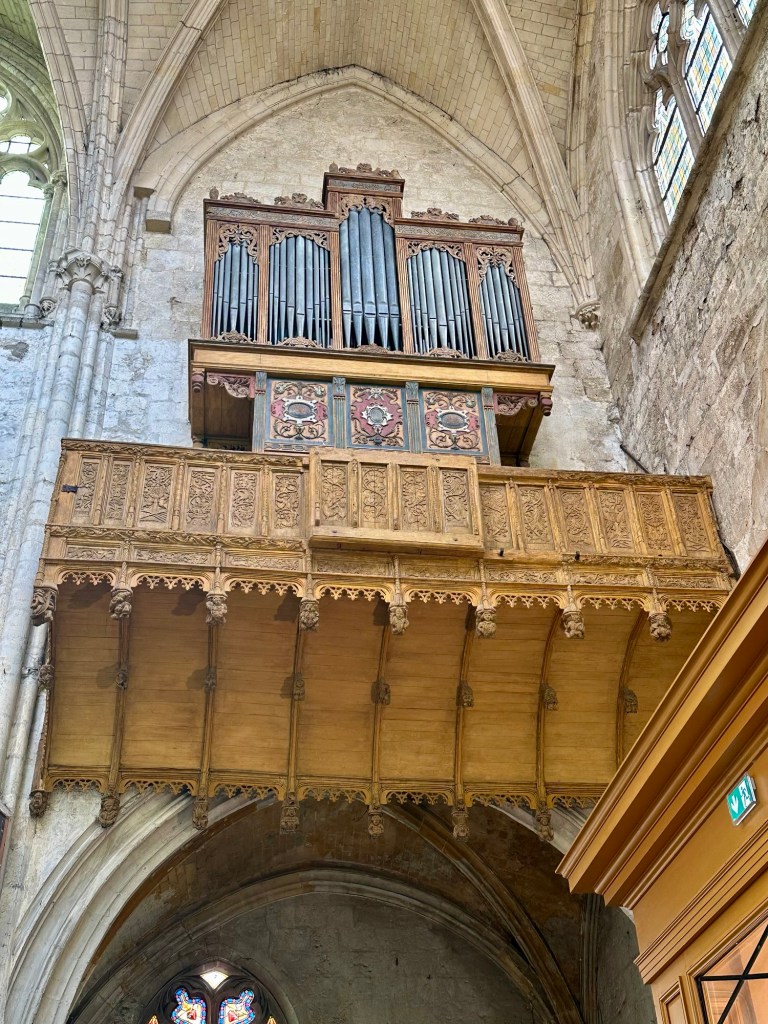
Then I notice an organ dangling from high up a side wall just inside the front door. A plaque says that the wooden casing was carved in the 1500s. I’ve been inside so many ancient European churches over the years that rarely does a church feel unique, but this one does if for nothing other than its sheer tenacity—and one crazy organ.
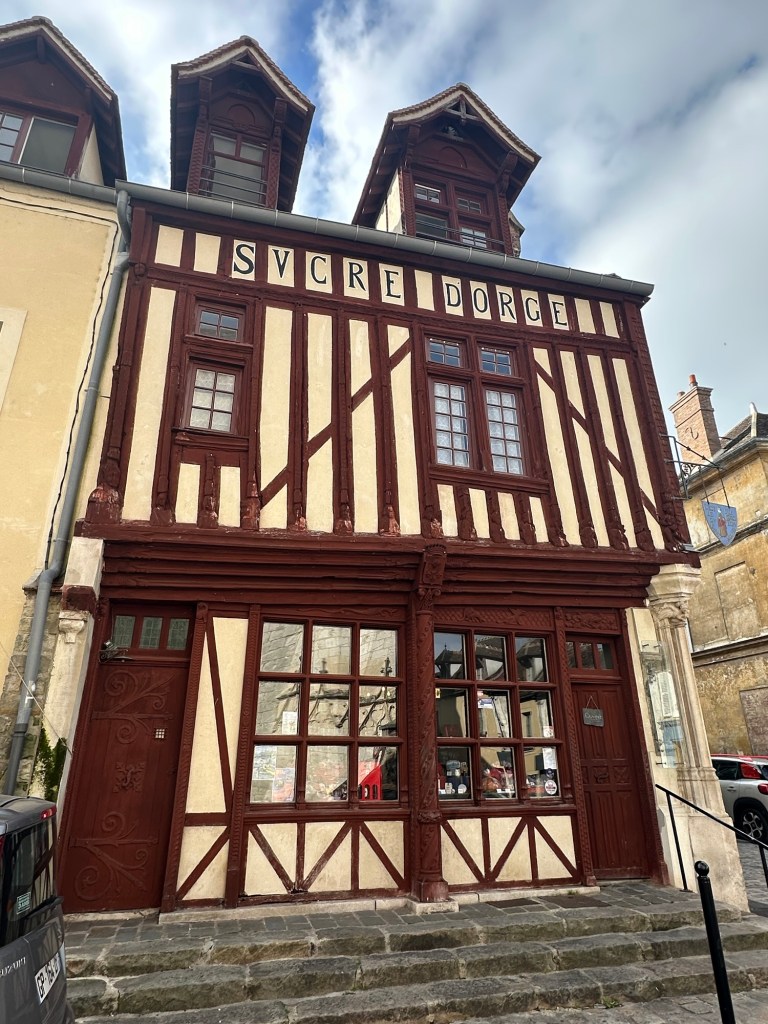
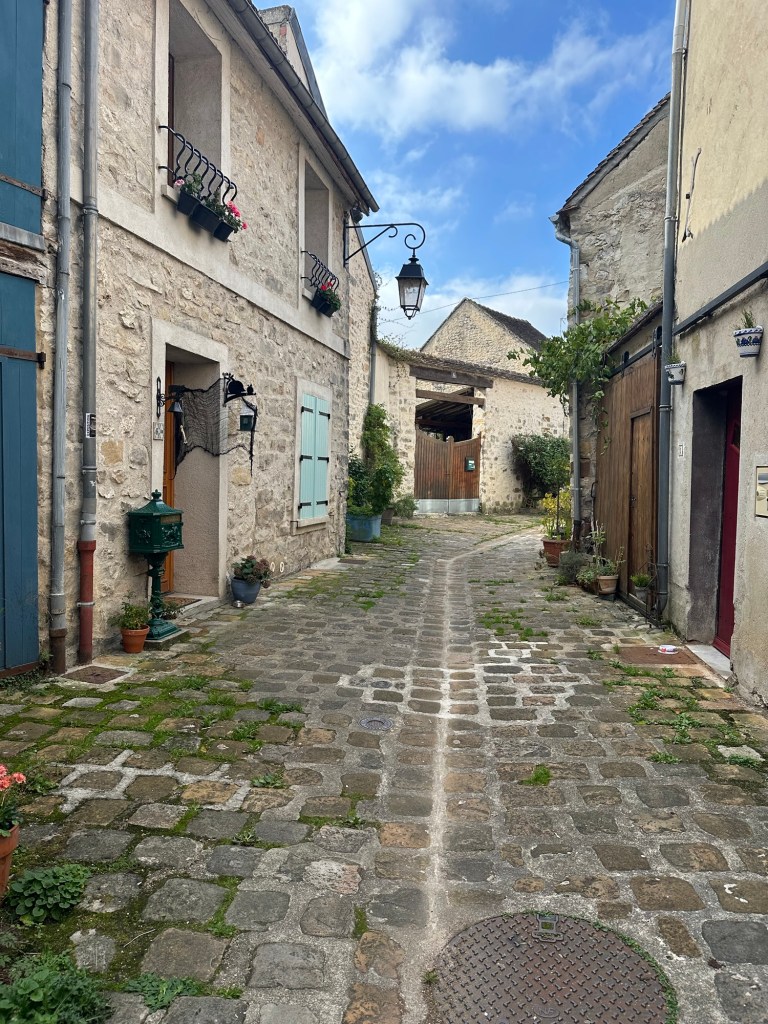
I exit and continue uphill past buildings which existed the day the organ was finally installed. The timbered beams are a nice change from the mountain of stone that built this village. I cut through an alley so narrow that I can reach out and touch the walls on both sides. Below my sneakers scuff across well-worn orange pavers.
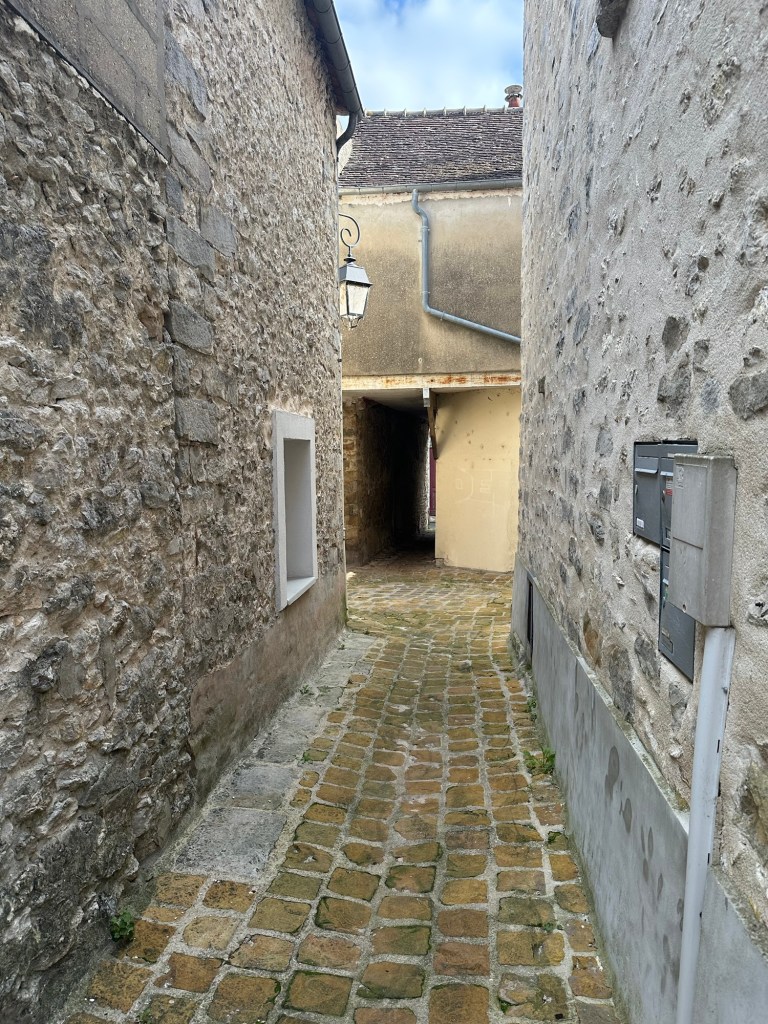
As I round the corner, I watch an old woman standing inside a window sunning her face. She struggles into a chair and looks up at me. I wave hello; she waves back. I can’t help myself. When she looks away, I take this photo:

At last, I come upon the donjon, probably the most famous building in Moret sur Loing. Today, it’s the only part of the castle to survive the revolution. It’s enormous, a bit more Gothic cathedral than torture chamber. I imagine the real estate listing: lovely castle in town, ten bedrooms, ten baths, two cells that can each comfortably sleep six (up to 30 in a pinch). Rack and thumb screws not included.
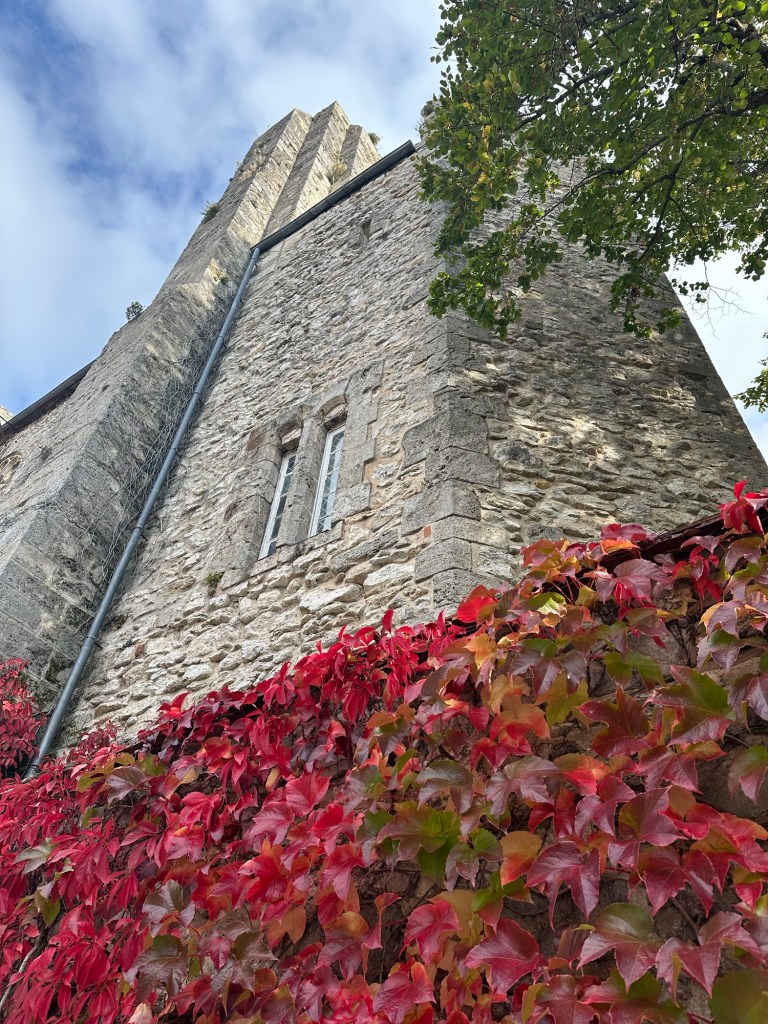
Here I reconnect with the Japanese couple. The man is taking photos. I notice he hasn’t touched his water. Should I caution him on the perils of dehydration?
I realize I’m parched.
It’s nearing time to eat a quick lunch and head back to Paris. Since Pat and I are leaving to hike Burgundy on Monday (the day this is scheduled to post), I check out the menu at the Place de Bourgogne but take a pass when I discover that enchiladas are the main course. In my mind, the French are better known for horse than enchiladas, which means (I hope you predicted this outcome) that I’m about to interview a new crêpe man.

Perhaps this indiscretion is a mistake. Or maybe it just doesn’t matter what I eat. The crepe is meh. My crêpe man (his name is Alexis) was never in peril.
As I consider the day, I decide to accept the assertion that this village is the most charming day trip from Paris. After all, I’m not the charm police. Besides, it’s a walker’s paradise and reasonably uncrowded. Throw in a beautiful fall day, and I can find no downside.
Discover more from The World In Between
Subscribe to get the latest posts sent to your email.
Categories: Life in Paris
 The World In Between
Thank you for this wonderful tour 🙂
LikeLiked by 1 person
You are very welcome!
LikeLiked by 1 person