
We headed east from the Keleti Train Station…
In the eastern most reaches of Hungary, between Slovakia, the Ukraine and Romania, sits the Tokaj wine region and the small village of the same name. The area is known for sweet, white wines. Mention Tokaj to a Hungarian and invariably they will thump their chest and smile like a proud parent. Tokaj is to Hungary (and a part of Slovakia) what feta is to Greece or Chianti to Italy; an EU protected designation applied only to these sweet wines produced in this very specific region.

The view from the interior window was just as beautiful…
A month ago, we joined a group of Anglophones, mostly Americans, on a day tour of Tokaj. In the days leading up to the trip, I read of the history of the wines, familiarized myself with the three vineyards we would visit, and studied their location on the map. As I ran out the door to the awaiting van, I grabbed my pen and notebook to scribble notes believing I was headed to a blogger’s paradise. I record random descriptions of people we meet and sensory images. Siting quietly in the village square I focus on each smell and sound. Without this diary, my posts thump like a flat tire.
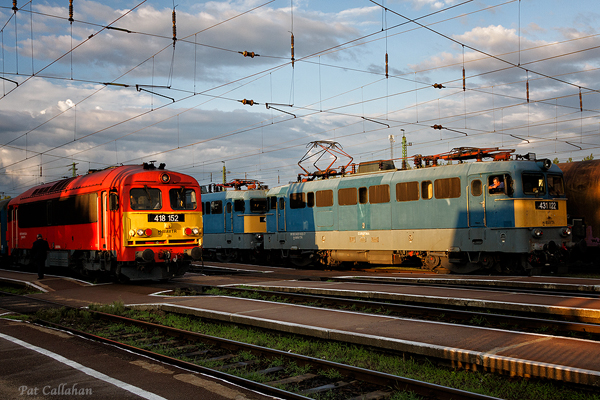
We puffed off on our little blue Hungarian train
Our tour schedule detailed the events of the day; a walk through the Tokaj village and our first tasting; a lunch at a tiny vineyard in the village of Mád plus a visit inside the historic synagogue; and lastly, a tasting at one of the larger commercial vineyards. Since I would learn of the synagogue during the visit, I didn’t research it before the trip. I felt pretty cheeky as I settled into our large van. During the tour guide’s introductory speech, I whispered additional nuggets of information into Pat’s ear (he loves it when I do this) – filling in the blanks of omitted facts I deemed critical to his Tokaj experience.
Leaving Budapest fifteen minutes late, we fell behind schedule right out of the gate. At the halfway point, we stopped at a rest area for nearly 30 minutes (I’m not quite sure why). Ten minutes later the bus driver needed a mandatory rest stop. I no longer ask questions like “Why wasn’t our stop his break.” It just wasn’t – let’s move on.

And were charmingly welcomed at the train station in Tokaj
An hour late, we pulled into our first testing location. The tour of Tokaj village fell by the wayside. The synagogue in Mád became the next victim of our tardiness. We tossed down the tastings at the third, and last, vineyard the way Italians throw back their morning espresso – not for enjoyment but to brace for the impending day. At this point our guide warned us that the bus driver had to be back in Budapest by a certain time – or risk violating the total allowed hours of work. We ran to the bus and scurried directly home – never quite certain the penalty for working a few too many minutes.
As I sat at my desk the following day, I googled the synagogue in Mád and discovered a New York Times article on the restoration of this historically significant synagogue – one of the oldest in Hungary. I added up the cost of the trip on my big number calculator, double checked, triple checked and sighed. We spent over 300 dollars for a single day, and missed those stops most interesting to me. And worst of all, I had nothing to write about. Nothing (unless you count this blog, but I don’t).
Returning to Tokaj and Mád became a mission bordering on obsession. I knew I could do better. And I had to get inside the synagogue.
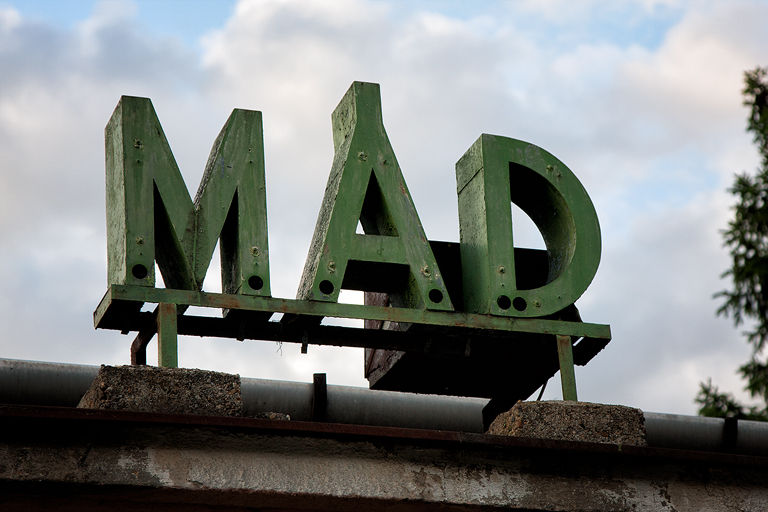
The Mad sign seemed a bit more threatening.
Last Monday, I plotted a return to Tokaj. Friday afternoon, we set off for Keleti train station. The train to Tokaj was packed – yet we managed to secure last minute seats. The next day, we figured out the train from Tokaj to Mád. In spite of a frantic scurry when the conductor informed us we had a ticket, but no reservation, everything moved like clockwork.
We spent 48 perfect hours in Tokaj. I cried in the synagogue in Mád as I read the names from this tiny village who perished in Auschwitz. And I cried again when its volunteer proprietor told us his story – his very personal motivation to act as a loving steward for this synagogue in a village without a single remaining Jew. We walked to the end of a lonely dirt road to peek over the stone fence at the Jewish tombstones peppering the hillside, and then returned to a private vineyard for a tasting accompanied by locally made cheeses, chutney, and an almond cake.

though the little regional train which took us there was cute
A wonderful, young family hosted us in their tiny Vendégház in Tokaj. I discovered why so many of the Tokaj museum religious icons are Russian Orthodox. A Catholic processional walked slowly, solemnly down the hill leaving the faintest whiff of incense in the air long after they disappeared behind the massive wooden door. Storks tapped out a private communication – an apparent warning of some sort – back and forth from their chimney top nests.
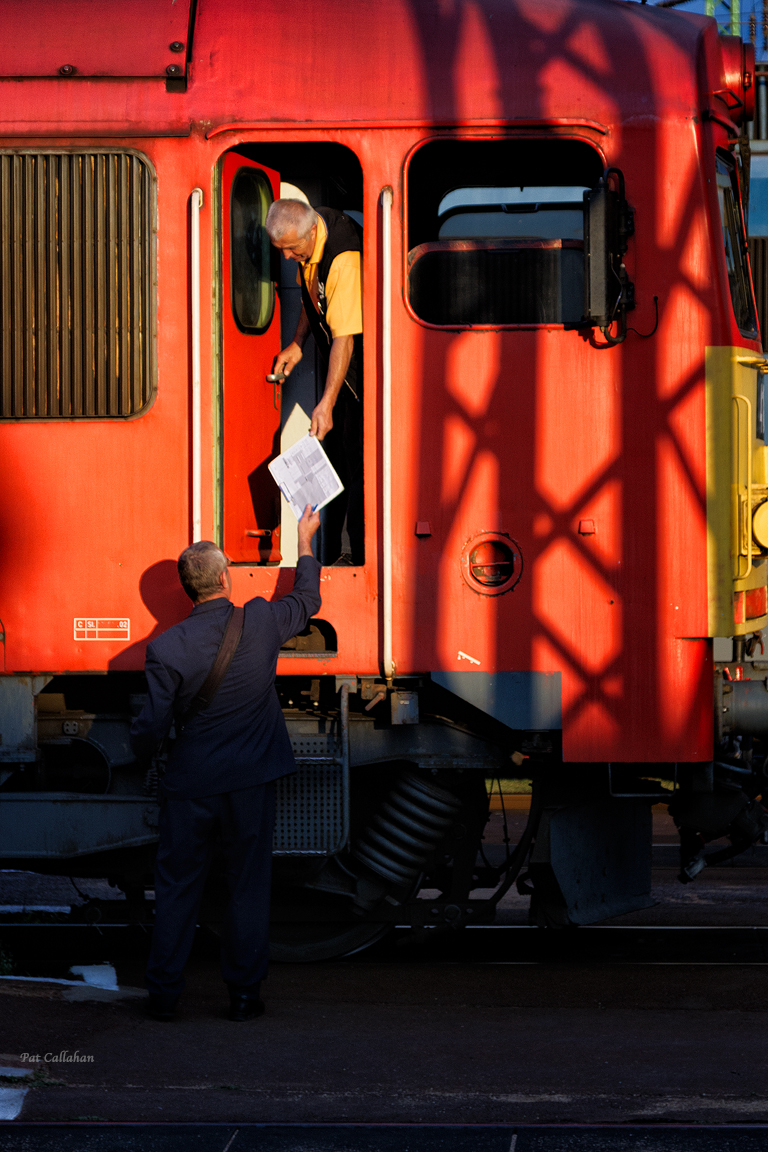
A bit of paperwork and we are on our way – now back safely home
The entire trip cost less than 300 dollars, and I came back with pages of scribbled notes, enough blog fodder to fill a month or more of posts.
I learned even the best tour company can’t fill in the blanks of my own laziness. Planned tours rarely include my favorite laggardly pastimes; aimless wandering, poking through the haphazard community market, talking to complete strangers. We can’t wait to hit the road again. Nor can I wait to write a series of blogs about our trip to Mád and Tokaj.
I hope you’ll stay tuned…
Discover more from The World In Between
Subscribe to get the latest posts sent to your email.
Categories: Central/Eastern Europe
 The World In Between
I love hearing from readers. Please comment!